

A bookkeeping cleanup takes you from missing statements and guesswork to reconciled, correctly categorized, tax-ready books. The first move is a pre-cleanup audit: pull your bank and credit card statements, invoices, and payroll records, then scan for how many months are unreconciled. Below is the full checklist, plus realistic time and cost ranges, and how Amcfo can help if you'd rather hand it off.
TL;DR:
- A pre-cleanup audit should identify unreconciled months exceeding three and large amounts in uncategorized transactions or missing statements.
- Reconciliation must start with the oldest unreconciled month to prevent errors from cascading, followed by credit card and merchant account matches.
- Simplifying the chart of accounts and categorizing transactions carefully reduces future maintenance and improves report clarity.
- The time and cost of cleanup vary mainly based on the number of unreconciled months and transaction volume, with larger backlogs taking several months to resolve.
- Post-cleanup habits include weekly categorization, monthly reconciliation, and annual reviews, supported by automation tools to maintain clean books.
Table of Contents
- What Does a Pre-Cleanup Audit Look Like?
- The Step-by-Step Bookkeeping Cleanup Checklist
- How Long and How Much Does a Cleanup Actually Cost?
- What Should You Pay (or Charge) for a Cleanup?
- How Do You Keep Your Books Clean After the Cleanup?
- When Does a Cleanup Call for More Than a Bookkeeper?
- The Mistakes That Turn a Simple Cleanup Into a Six-Month Project
- How Amcfo Handles Bookkeeping Cleanups
- Sources
What Does a Pre-Cleanup Audit Look Like?
Before you touch a single transaction, figure out how bad things actually are. Most small business owners underestimate this, then get blindsided three hours into the project when they realize six months of bank feeds never got matched to anything.
Start by pulling up your chart of accounts and your bank feed. You're looking for patterns, not perfection. A few unreconciled months is a Tuesday afternoon problem. A large backlog of "Uncategorized Expense" piling up is a different animal entirely.
Common warning signs that signal a real mess:
- Bank or credit card accounts that haven't been reconciled in three or more months
- A large chunk of transactions sitting in "Uncategorized" or "Ask My Accountant"
- Duplicate entries from double-imported bank feeds or manual re-entry after a sync failure
- Missing statements for any month, especially around a bank switch or a new credit card
- Journal entries with no memo, no backup, and no obvious business reason
- Accounts receivable or payable balances that haven't moved in months, suggesting stale invoices nobody followed up on
- Payroll liabilities that don't match what you actually paid the IRS or state agency
Once you've spotted the red flags, gather the minimum records to actually start: 12 to 24 months of bank and credit card statements, payroll reports, any loan or lease documents, and last year's tax return if one exists. If you use QuickBooks, run a Transaction List by Date report covering the questionable period. It'll show you gaps immediately.
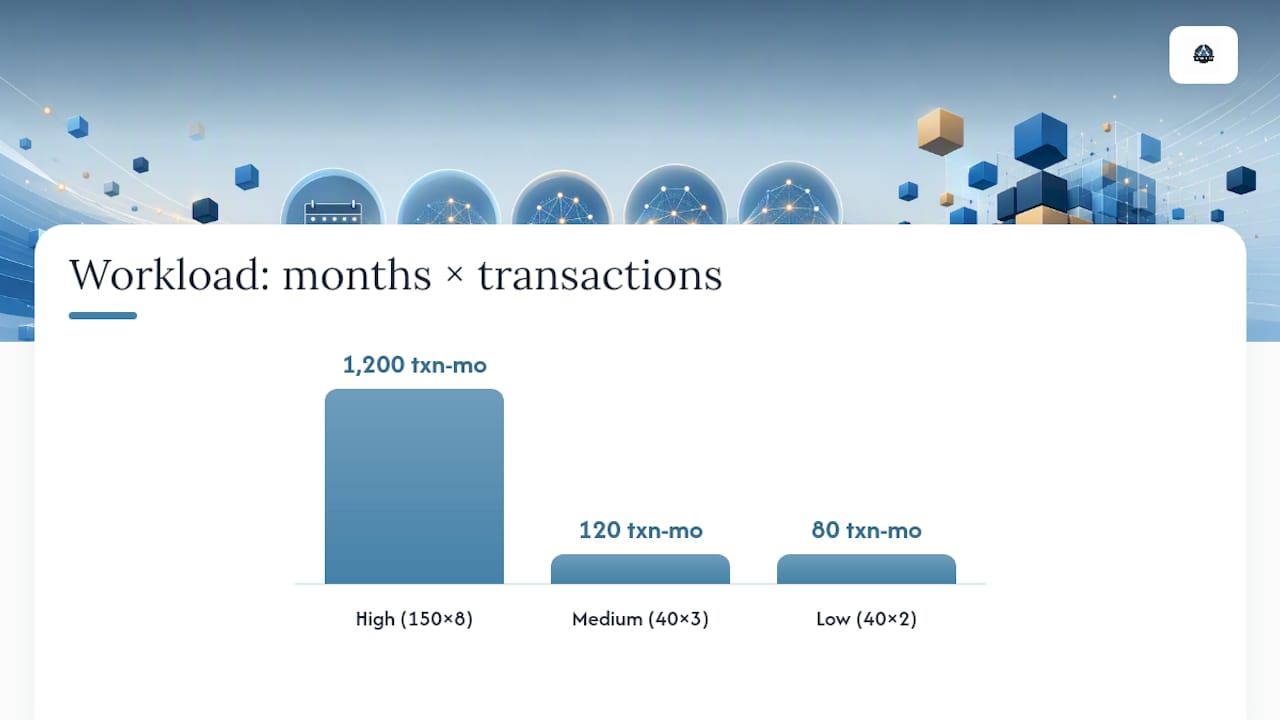
Then build a quick worksheet. List each bank and credit card account, note the last reconciled date, and estimate transaction volume per month. A business running 150 transactions a month for eight unreconciled months is looking at a very different job than one running 40 transactions for two months. This single number, months unreconciled times average monthly transaction count, drives almost every estimate that follows, from hours needed to what a bookkeeper will quote you.
The Step-by-Step Bookkeeping Cleanup Checklist
This is the order that actually works. Skipping ahead, say, categorizing before you reconcile, creates rework almost every time, because you end up recategorizing the same transactions twice once the real bank balance surfaces.
-
Gather documents and set up a job folder. Collect every bank and credit card statement, payroll reports, AR/AP aging reports, loan documents, and prior tax returns. Create one shared folder (Google Drive, Dropbox, or your accounting software's document center) so nothing gets emailed into a black hole. QuickBooks' cleanup guide recommends this as the first formal step, and it's the one people skip most often because it feels like busywork. It isn't. It's the difference between a two-week job and a six-week job.
-
Reconcile bank accounts month by month, starting with the oldest unreconciled month. This is the labor center of the entire cleanup. Working newest-first feels intuitive but backfires, because errors from an earlier month carry forward and you end up chasing the same discrepancy across three reconciliations instead of one. Match every transaction to the statement, flag anything that doesn't have a clear counterpart, and don't move to the next month until the current one balances to the penny.
-
Reconcile credit cards and merchant accounts the same way. Payment processors like Stripe or Square often deposit net amounts after fees, which creates confusion if you're recording the gross sale. Separate the processing fee as its own expense line so your revenue numbers aren't quietly understated.
-
Clean and simplify the chart of accounts. Merge duplicate accounts (you probably have "Office Supplies" and "Office Expense" doing the same job), archive anything with zero activity for two years, and rename vague categories into something a tax preparer could actually use. A bloated chart of accounts with 200 line items is harder to maintain than a lean one with 40.
-
Categorize every uncoded transaction. For anything ambiguous, ask three questions: Is this a business expense? Which account does it belong to? Is there a receipt or invoice backing it up? If you genuinely can't tell what a transaction was for, don't guess. Flag it for the business owner or move it to a suspense account rather than burying it under a category that'll mislead your financial reports later.
-
Clear accounts receivable and payable. Match every open invoice to the deposit or credit that actually paid it. For invoices sitting unpaid past 120 or 180 days with no realistic path to collection, write them off rather than letting them inflate your AR balance and make your books look healthier than reality.
-
Reconcile payroll and payroll liabilities. Compare what your payroll provider reports against what actually hit your bank account and what you remitted to tax agencies. Mismatches here are common when a business switches payroll providers mid-year or misses a quarterly filing.
-
Adjust inventory and fixed assets. Verify inventory counts against what's recorded on the books, and make sure fixed assets (equipment, vehicles, leasehold improvements) are recorded with proper depreciation schedules and supporting purchase documentation, not just a lump estimate somebody typed in three years ago.
-
Record missing journal entries and accruals, then run a trial balance. This catches loan interest, prepaid expenses, and depreciation that hasn't been recorded. Once entries are in, pull a trial balance and check that debits equal credits and that account balances make logical sense (negative cash, for instance, is a red flag worth investigating immediately).
-
Finalize with reconciled financial statements and full documentation. Your output should be a clean balance sheet, profit and loss statement, and general ledger, plus a folder of supporting documents ready to hand to a tax preparer or CFO.
Pro Tip: Keep a running "decisions log" as you work, a simple spreadsheet noting why you categorized ambiguous transactions the way you did. Six months later when a tax preparer or auditor asks "why is this $4,200 charge under Professional Services instead of Marketing," you'll have an answer instead of a guess.
How Long and How Much Does a Cleanup Actually Cost?
Timeline and cost scale almost entirely with two factors: how many months are unreconciled and how many accounts and transactions you're dealing with.
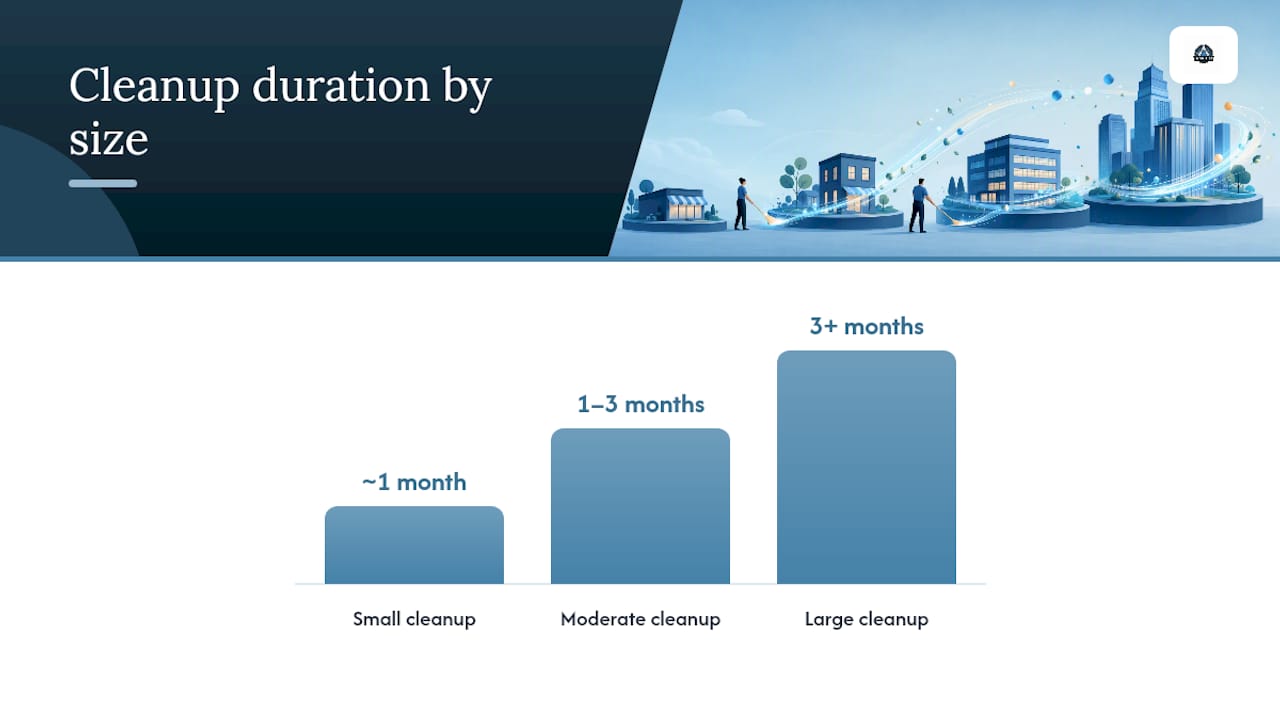
- Small cleanup (1 to 3 months unreconciled, single bank account, low transaction volume): Often wraps in about a month, sometimes a few focused weeks of part-time work.
- Moderate cleanup (3 to 12 months, multiple accounts, some payroll or AR/AP complexity): Usually runs one to three months depending on how many hours per week get devoted to it.
- Large cleanup (a year or more unreconciled, multiple entities, inventory, or payroll issues): Three months or longer is realistic, especially when records are incomplete and someone has to reconstruct history from bank statements alone.
Fee models vary. Some bookkeepers charge hourly, which makes sense for unpredictable scope. Others quote a flat project fee once they've reviewed your books, which protects you from scope creep. A few structure cleanups as the first month of an ongoing monthly retainer, essentially building the fix into the start of a longer engagement.
A few things reliably push cost higher: missing statements that require calling the bank for archived copies, payroll history that needs reconstruction, inventory that hasn't been counted in years, and any business running more than three or four active accounts. Whatever the price, a properly scoped engagement should deliver reconciled statements for every account, a cleaned chart of accounts, a trial balance, and a document package ready for tax filing, not just "your QuickBooks looks better now" with no paper trail behind it.
What Should You Pay (or Charge) for a Cleanup?
If you're hiring someone, or you're a bookkeeper trying to quote fairly, pricing a cleanup without a formula is how both sides end up unhappy.
- Hourly billing works best when the scope is genuinely unknown, less than a month of data, or highly irregular records.
- Flat-fee project pricing works once someone has actually reviewed the books and can scope the job, and it protects the client from surprise overages.
- Retainer-based pricing makes sense when the cleanup rolls straight into ongoing monthly bookkeeping.
A useful ballpark: multiply average transactions per month by months unreconciled, then multiply that by roughly 0.02 to 0.05 hours per transaction, and add fixed time for research and journal entries. A business with 200 monthly transactions and 6 unreconciled months lands somewhere around 24 to 60 hours of pure reconciliation work before you even factor in AR/AP cleanup or payroll fixes, according to pricing guidance from bookkeeping industry sources.
Watch for red flags in vague quotes: no mention of transaction volume, no defined start and end date, and no list of what you'll actually receive at the end. Before signing anything, ask what reports you'll get, whether the final file transfers to you or your existing software, and what happens if the scope turns out bigger than expected once work starts.
Pro Tip: Ask any bookkeeper you're evaluating to name their transaction-based estimate out loud, not just a total dollar figure. If they can't explain how they got the number, they probably didn't calculate it. They guessed.
How Do You Keep Your Books Clean After the Cleanup?
A cleanup that doesn't come with a maintenance habit just becomes next year's cleanup. The fix is a short, boring, repeatable routine.
- Weekly: Categorize new transactions as they hit the bank feed, and file receipts immediately rather than letting them pile up in a shoebox or a phone camera roll.
- Monthly: Reconcile every bank and credit card account, review outstanding AR and AP, and confirm payroll liabilities match what was actually remitted.
- Quarterly: Review the chart of accounts for new duplicates or drift, check inventory counts against the books, and confirm depreciation schedules are current.
- Annually: Do a full review before tax season, ideally with enough lead time to fix anything before your preparer starts asking questions.
Automation earns its keep here. Bank rules in QuickBooks or similar software can auto-categorize recurring vendors, and receipt-scanning apps eliminate the shoebox problem entirely. A simple control like requiring two sets of eyes on any transaction over a set dollar threshold catches errors before they compound into next year's cleanup project. Amcfo's checklist for organizing business financial records is a solid reference for building this into a habit rather than a one-time fix.
When Does a Cleanup Call for More Than a Bookkeeper?
Amcfo works with small businesses at exactly this stage, offering one-time QuickBooks cleanups, ongoing bookkeeping, and fractional CFO support once the books reveal something bigger than a coding error. Our QuickBooks cleanup checklist walks through the same 12-step structure covered above, with templates you can use directly during the job rather than building your own tracking sheet from scratch.
Some cleanups surface issues a bookkeeper alone shouldn't try to solve:
- Cash flow that doesn't match what the P&L suggests it should be
- Material misstatements that would change how a lender or investor reads your financials
- Tax exposure significant enough that the fix affects strategy, not just recordkeeping
In those cases, a fractional CFO interprets the cleaned-up numbers, prioritizes which fixes matter most, and helps you decide what to do next, rather than just handing you a balanced trial balance and walking away. Larger remediation projects sometimes benefit from bringing in complementary expertise too, like a fractional COO when operational and financial issues are tangled together, or legal support when engagement contracts and documentation need tightening up.
The Mistakes That Turn a Simple Cleanup Into a Six-Month Project
The single most common mistake isn't sloppy categorization. It's skipping the audit step and diving straight into "fixing" transactions before anyone has scoped how big the problem actually is. Business owners open QuickBooks, start reclassifying whatever looks wrong, and three weeks later discover the real issue was four months of unreconciled bank activity sitting underneath everything they'd already touched.
The second mistake is mixing personal and business transactions and assuming it's fine because "it's a small business anyway." It isn't fine. It muddies every category and makes the eventual fix twice as slow, because someone has to separate personal spending from legitimate expenses line by line.
If you're prioritizing, reconcile bank and credit card accounts first, always. Everything downstream, categorization, AR/AP cleanup, journal entries, depends on knowing your real cash position. Categorizing against an unreconciled balance is building on sand.
The last piece, and the one people skip because it feels optional, is documentation. Note why you made judgment calls on ambiguous transactions. When the cleaned books eventually land with a tax preparer or a CFO, that trail is what turns a two-hour handoff into a two-week interrogation.
— Angelica
How Amcfo Handles Bookkeeping Cleanups
Cleanup engagements typically follow this checklist: full pre-cleanup audit, month-by-month reconciliation starting from the oldest unreconciled period, chart-of-accounts simplification, and a finished package built specifically for whoever handles your taxes next.

A scoped engagement typically includes reconciled bank and credit card statements, an adjusted trial balance, a payroll summary, and an AR/AP aging report, the same handoff package that shortens tax prep time and cuts down on back-and-forth questions from your preparer. You get a defined timeline, a clear list of deliverables before work starts, and a clean transfer of files into your existing software once the job wraps, so nothing gets stuck in someone else's system. If the cleanup uncovers cash flow issues or bigger strategic questions, that same engagement can roll into ongoing accounting and bookkeeping support or fractional CFO guidance without starting the relationship over. If your books have been off for more than a few months and you'd rather hand the reconciliation work to someone who does it daily, consider reaching out to a professional service to get a scoped quote before the backlog grows another quarter.
Sources
This article is general information, not a substitute for advice from a qualified financial advisor. Consult a qualified financial professional about your own circumstances before acting on anything here.