
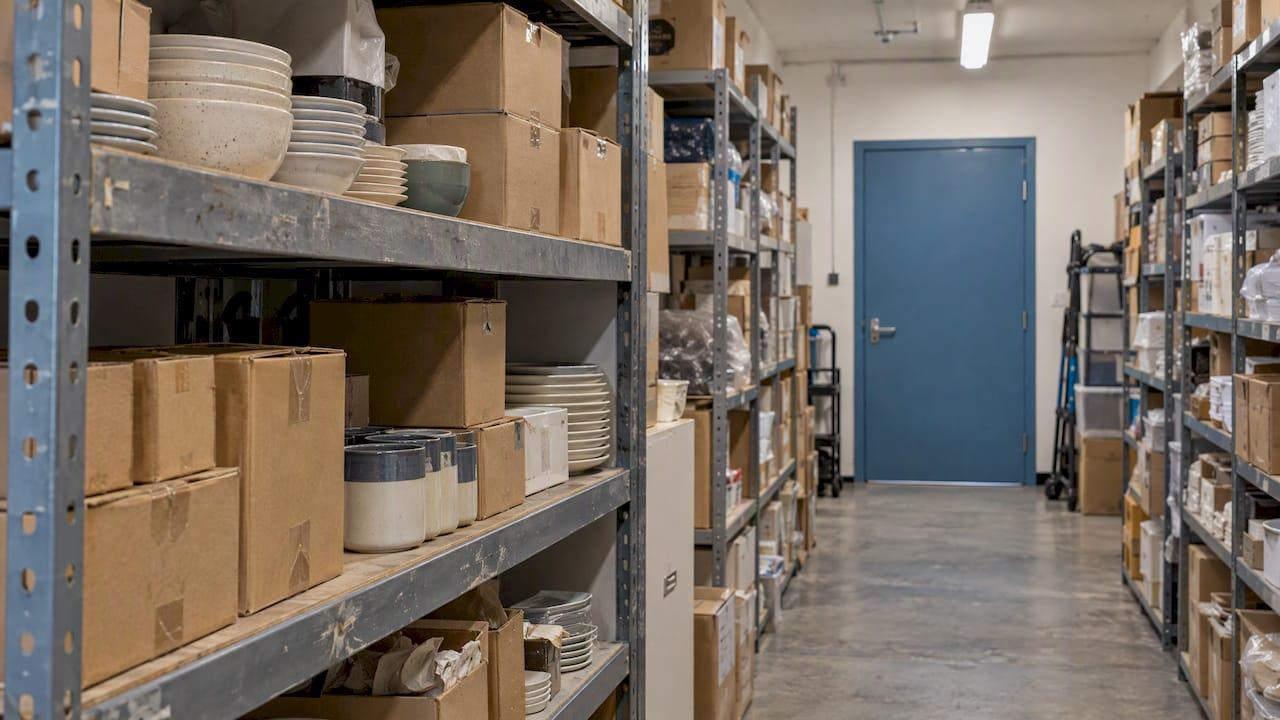
Every dollar you spend on inventory is a dollar you cannot spend on payroll, rent or growth until that stock sells and the customer pays. That is why a business can show a healthy profit and still run short of cash: the money sits on the shelf. The fix is to measure how long your cash stays in inventory, forecast around it, and tighten purchasing and supplier terms so stock turns into cash faster.
TL;DR
- Buying inventory is a cash outflow now. The profit only appears on your income statement when the goods are sold, and the cash only arrives when the customer pays.
- On an indirect-method cash flow statement, an increase in inventory reduces operating cash flow and a decrease adds to it.
- Track days of inventory on hand and turnover. They show whether stock levels are too high, too low or about right.
- Longer supplier terms, consignment, faster invoicing and a rolling cash forecast are the most practical levers.
- Cutting stock too far has a cost too: stockouts mean lost sales and less cash coming in.
Table of Contents
- Why inventory eats cash before it makes any
- How inventory moves through your financial statements
- The numbers that show how much cash is stuck
- Too much stock, too little stock
- Seven ways to free up cash tied in inventory
- Where the bookkeeping has to be right
- Our perspective
- Get help turning inventory into usable cash
- FAQ
- Sources
Why inventory eats cash before it makes any
Inventory is an investment of cash. A business typically pays for inventory at purchase or within 30 days, yet it may take days, weeks, months or even years before that stock is resold or used in a product that sells. In between, the cash is unavailable for anything else.
This is the gap between profit and cash. Profit is recorded when you sell. Cash moves when you pay the supplier and when the customer pays you. Inventory sits in the middle of both, and the longer it sits, the longer your money is locked up.
The same inventory that funds your sales can also drain you. The cash flow cycle revolves around inventory, which can both generate and deplete cash as stock and cash fluctuate daily. Thinking of inventory as a pool of cash you have converted into goods, not as a neutral asset, changes how you buy.
The costs that come with holding stock
The purchase price is only the first outflow. Excessive inventory can push cash flow in the wrong direction because storage, packaging and shipping costs rise as inventory grows. Add insurance, shrinkage, handling labor and the risk of markdowns, and a slow-moving product line costs more than its invoice.
Overbuying has a second cost: flexibility. A lack of cash can leave a business unable to respond quickly to opportunities that may be vital for growth. A supplier offers a volume discount, a competitor exits a market, a key hire becomes available, and the cash is already sitting in boxes.
How inventory moves through your financial statements
Three statements tell three different stories about the same stock. Reading them together is what exposes a cash problem early.
- Balance sheet: inventory is a current asset. When you buy, inventory rises and cash (or accounts payable) changes.
- Income statement: inventory becomes cost of goods sold (COGS) only when you sell it. Unsold stock does not reduce profit.
- Statement of cash flows: shows the actual cash effect, including the inventory you bought but have not yet sold.
The link between them is a simple formula. Beginning inventory plus purchases minus COGS equals ending inventory. Put another way, the change in inventory is the difference between merchandise purchases and cost of goods sold during the period. If you buy more than you sell, inventory grows and cash shrinks relative to profit.
Inventory on the cash flow statement
Most small businesses see inventory on the statement of cash flows through the indirect method. The indirect method starts with net income and adjusts for non-cash items and for changes in current assets and current liabilities. Inventory is one of those current assets.
The sign trips people up. An increase in inventory is shown as a negative on the statement of cash flows, and a decrease is shown as a positive. The logic is that you spent cash to build the stock that net income does not yet reflect.
The formal basis for this presentation is the accounting standard on cash flow reporting, which describes how the indirect method adjusts net income for deferrals, accruals and items that do not affect operating cash receipts and payments. It also matters that you read the statements as a set: a statement of financial position alone gives an incomplete picture of liquidity and financial flexibility.
A worked example
The numbers below are hypothetical, to show the mechanics.
| Item | Amount |
|---|---|
| Beginning inventory | $50,000 |
| Purchases during the year | $430,000 |
| Cost of goods sold | $410,000 |
| Ending inventory (50,000 + 430,000 - 410,000) | $70,000 |
| Increase in inventory | $20,000 |
| Net income | $60,000 |
| Operating cash flow effect of inventory | -$20,000 |
This business reports $60,000 of profit. After the inventory build, it has $40,000 of cash from those operations, before looking at receivables, payables and other items. The $20,000 difference did not vanish. It is sitting in the warehouse. If the business had a tax bill, a payroll run and a loan payment to cover from that cash, the profit figure would have been misleading as a guide to what was available.
The same applies in reverse. If this business sells down its stock by $20,000 next year without replacing it, cash flow from operations will exceed net income by that amount. That is a one-time release of cash, not a repeatable source of income, which is why a cash forecast matters more than the profit line when you plan.

The numbers that show how much cash is stuck
Two measures turn a vague worry into something you can manage.
Days of inventory on hand
Using the example above: $410,000 of COGS divided by 365 days is about $1,123 a day. With $70,000 of ending inventory, the business holds roughly 62 days of stock. Every day you shave off that number releases about $1,123 of cash.

Inventory turnover
Turnover is COGS divided by average inventory. In the example, average inventory is ($50,000 + $70,000) / 2 = $60,000, so turnover is about 6.8 times a year. Businesses can use turnover analysis to identify inventory levels that are excessive, too low or just right, and reducing excessive levels lowers the inventory investment and improves cash flow.
A good number depends on your industry. A grocer turns stock many times a year, while a furniture or equipment dealer turns it far less. Compare yourself with your own history by product line first, then with businesses like yours.
Your costing method changes the picture
How you value inventory affects reported COGS and profit, though not the cash you actually spent. The IRS explains that you use the specific identification method when you can match actual cost to items, and FIFO or LIFO when you cannot. In a period of rising prices the method you choose can move taxable income, and with it your tax payment. We cover the trade-offs in our guide to inventory accounting methods for US small businesses. Talk to your CPA before changing methods, because a change in inventory accounting generally has tax rules attached.
Too much stock, too little stock
There is no virtue in empty shelves. The two failure modes are mirror images.
Understocking. Holding less stock can improve cash flow because you pay only for what you need, but it risks not having stock to meet customer demand. And being sold out is not always ideal, because missed opportunities can hurt cash flow.
The target is not minimum inventory. It is the lowest level that still protects your sales, set product by product.
Seven ways to free up cash tied in inventory
1. Sort stock by how fast it moves
Pull a report by SKU or product family and rank by turnover and margin. Fast movers with solid margins deserve protection. Slow movers with thin margins are where cash hides. Many businesses find that a small share of items accounts for most of the sales, and the long tail accounts for most of the dust.
2. Negotiate supplier terms
The longer you take to pay, the longer your cash works for you. Businesses can conserve cash by negotiating longer payment terms such as Net 30, 45, 60 or 90, or by arranging consignment so payment is due when products are sold. The SBA also notes that Net 30 accounts let you defer payment on purchases for 30 days. Suppliers often trade terms for volume commitments or a track record of paying on time, so clean books help your case.
3. Bill fast and collect faster
Inventory cash is only released when the customer pays. The same SBA guidance says to issue invoices immediately and follow up to collect payment. If you extend terms to customers while demanding quick payment from suppliers, you are financing your customers with your own cash.
4. Buy to a forecast, not to a feeling
A positive cash flow forecast can help owners decide when to order additional inventory. That works the other way too: a forecast that shows a cash dip in six weeks tells you to delay a purchase order. For a step-by-step method, see our guide to creating a cash flow projection.
Forecasting does not require perfect prediction. It is about running the business right by tracking the connections between sales, costs and expenses, rather than accurately guessing the future. Our piece on building a financial forecasting process shows how to set that up without a finance department.
5. Plan for seasonality
If you stock up before a peak season, the cash goes out months before it comes back. Map the build period, the selling period and the collection period on a monthly calendar, then check whether your cash covers the gap. If not, arrange credit or supplier terms before you need them, not in the middle of the build.
6. Clear dead stock deliberately
Obsolete goods rarely get more valuable. Bundling, discounting or selling to liquidators converts a sunk cost into cash you can reuse. Record the markdown correctly, since write-downs affect your books and your taxes.
7. Make the data visible
Owners who see turnover, days on hand and cash balance on one page tend to act sooner. Data dashboards built around profit are one way to put those figures in front of you every week rather than at quarter end. Even a monthly spreadsheet pulled from your accounting software works if someone reviews it.
Where the bookkeeping has to be right
Every tactic above depends on accurate inventory numbers. If the count in your accounting file does not match the shelf, your COGS, margins and turnover are all wrong, and so is the cash flow statement built from them.
Common causes we see in small business books are purchases coded to expense instead of inventory, receipts entered in the wrong month, and no regular reconciliation between physical counts and the ledger. Our overview of common small business accounting challenges covers more of them, and our guide to cash flow management best practices gives the wider routine.
Also know your break-even point. It tells you how much you must sell, including the stock you carry to do it, before the business covers its costs. We walk through it in break-even analysis using QuickBooks data.
Our perspective
We see the same pattern again and again. An owner looks at a profitable income statement, then at a bank balance that does not match, and assumes something is broken. Usually nothing is broken. The cash is in inventory, and nobody has measured it.
Our view is that inventory is a financial decision before it is an operations decision. Every purchase order is a commitment of cash, and it should be tested against a forecast. That takes reliable books first: clean QuickBooks data, reconciled inventory accounts and monthly reporting you can trust.
It also takes someone who looks at the numbers with you. That is why we pair accounting work with experienced fractional CFO oversight, so turnover, margins, supplier terms and cash projections are reviewed together instead of in separate silos. You get that guidance without the cost of a full-time executive, and you can select the services your business needs.
The goal is not the smallest possible inventory. It is the right inventory, bought with cash you can afford to commit.
Angelica
Get help turning inventory into usable cash
If your books do not yet show how much cash is tied up in stock, that is the place to start. AmCFO offers bookkeeping, QuickBooks setup and cleanup, budgeting, forecasting and fractional CFO services designed to give owners a clear view of cash, profitability and the decisions behind them. See our fractional CFO services or our accounting and bookkeeping services, or contact us through our site to talk through your situation.

FAQ
Does inventory affect cash flow?
Yes. Buying inventory uses cash when you pay the supplier, usually at purchase or within about 30 days, while the profit from selling it arrives later. A growing inventory balance reduces operating cash flow, and a shrinking one increases it.
Why is an increase in inventory negative on the cash flow statement?
Under the indirect method, you start with net income and adjust for changes in current assets. A rise in inventory means you spent cash that net income does not reflect, so it is subtracted. A decrease means you sold stock you had already paid for, so it is added.
What is the difference between net income and cash flow?
Net income measures revenue less expenses when they are earned or incurred. Cash flow tracks when money actually moves in and out. Inventory purchases, customer payment timing and supplier terms all cause the two to differ.
How do I reduce cash tied up in inventory without running out of stock?
Start with turnover and days on hand by product, then lower stock where it is clearly excessive. Negotiate longer supplier terms or consignment, forecast demand and cash together, and protect fast-selling items with a reorder point. Review the numbers monthly.
Sources
- Managing and accounting for your inventory, Wolters Kluwer
- Inventory management can help maintain cash flow, Chase for Business
- Cash flow forecasts and inventory, ICAEW
- Reporting and Interpreting cash flow patterns, Libby financial accounting
- What is a statement of cash flows?, U.S. SEC
- Inventory on the statement of cash flows, AccountingCoach
- Summary of Statement No. 95, FASB
- Statement of financial position and cash flows, FASB
- Publication 538, Accounting Periods and Methods, IRS
- How Net 30 Accounts Help Conserve Business Cash Flow, U.S. SBA
- Check Your Business KPIs Before The Holiday Season Starts, U.S. SBA
- 3 Every Day Planning Essentials for All Businesses, U.S. SBA