

If you're searching for amocap.com alternatives, the strongest option for most U.S. businesses is Amcfo (Amplify Consults), which covers bookkeeping, QuickBooks setup and cleanup, payroll, tax coordination, and fractional CFO consulting under one roof. Beyond Amcfo, the shortlist includes outsourced accounting agencies (Pilot, Ignite Spot), a startup-focused specialist (Kruze Consulting), and a finance talent marketplace (Paro). Demand for fractional CFOs has grown more than 300% since 2020, and over one-third of U.S. small businesses now outsource at least one core financial operation — so the market for these services has never been more competitive or better defined.
Pick Amcfo when you want a single firm handling everything from monthly closes to strategic planning. Choose a marketplace like Paro when you need a specific skill fast. Go with a startup specialist like Kruze when your primary driver is fundraising readiness.
Table of Contents
- Short profiles: what each alternative actually does
- How to choose the right alternative: criteria and screening questions
- Key Takeaways
- What actually drives a good recommendation here
- Amcfo covers the full stack, from books to board-level strategy
- Useful sources and further reading
Short profiles: what each alternative actually does
amocap.com offers online bookkeeping and fractional CFO services on a subscription model. It suits small businesses that want a single monthly fee covering basic financial management without deep customization. The platform leans on technology to keep costs down, which works well for straightforward books but can feel thin when a business needs hands-on cleanup or strategic planning.
Amcfo (Amplify Consults) provides bookkeeping, accounting, and QuickBooks setup and cleanup alongside payroll management, tax coordination, budgeting, forecasting, financial analysis, forensic accounting, and ongoing fractional CFO consulting. The firm works with businesses of all sizes and industries, billing on a mix of monthly retainers and project fees. Best for: owners who want one accountable team from daily transactions to board-level financial strategy.
Pilot automates bookkeeping using software and backs it with a team of accounting professionals. Pricing starts at a monthly retainer and scales with transaction volume. Strong fit for funded startups on QuickBooks or Xero that want clean books without managing an in-house team. Less suited to businesses needing hands-on CFO strategy or payroll support.
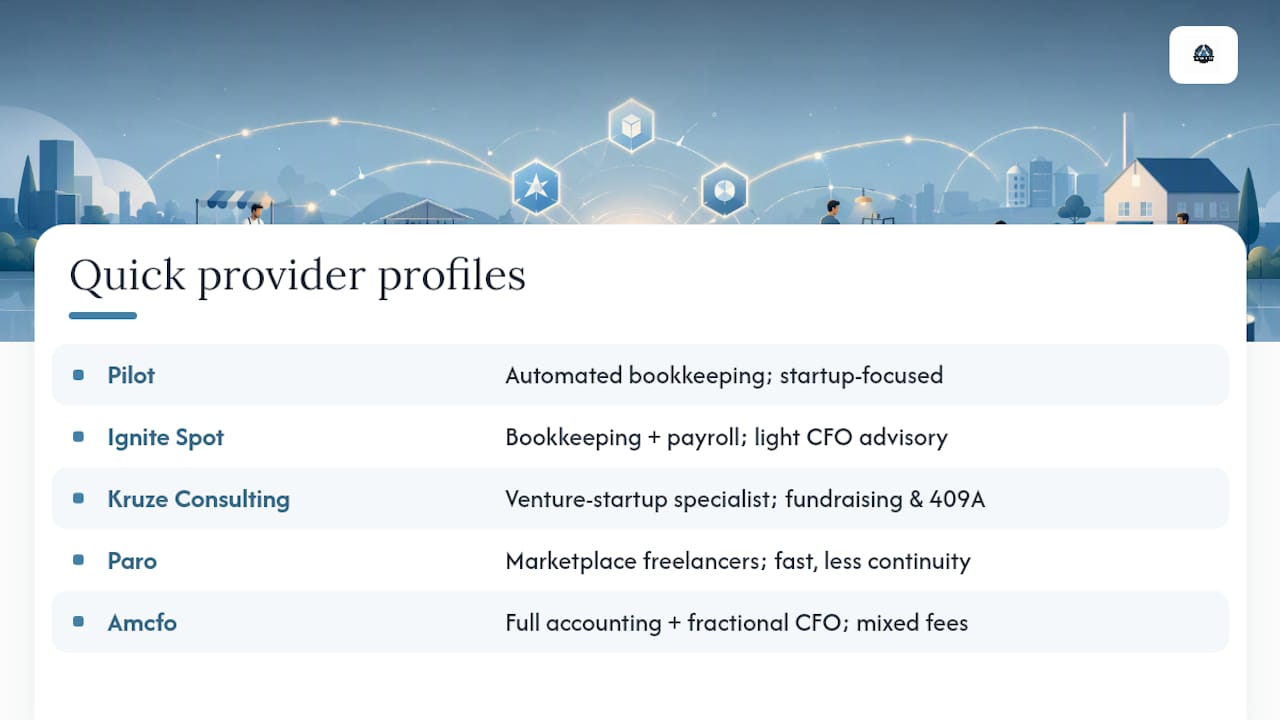
Kruze Consulting specializes in venture-backed startups, with particular depth in R&D tax credits, 409A valuations, and fundraising-ready financial statements. The firm model means you get a team, not a solo contractor. Pricing reflects the startup-specialist positioning. If your next 12 months involve a funding round, Kruze is worth a serious look.
Ignite Spot is an outsourced accounting agency targeting small businesses with bookkeeping, payroll, and CFO advisory on monthly retainers. The firm has a track record with service businesses and e-commerce. It covers the core financial stack but does not go as deep on strategic CFO work as a dedicated fractional-CFO firm.
Paro operates as a marketplace where businesses post a need and get matched with vetted freelance finance professionals — accountants, controllers, or CFOs. Speed is the main advantage: you can have someone working within days. The tradeoff is consistency; you are hiring an individual, not a firm with built-in coverage when your person is unavailable. Fractional arrangements through a firm rather than a solo contractor often provide better quality assurance and continuity.
Pro Tip: Before you contact any provider, write down the three financial decisions you most need to improve in the next 90 days. That list will surface the right scope faster than any menu of hours or services.
How to choose the right alternative: criteria and screening questions
Start with the decisions you need to improve, not the job title. A business that needs cleaner books and faster month-end closes has different requirements than one preparing for a Series A.
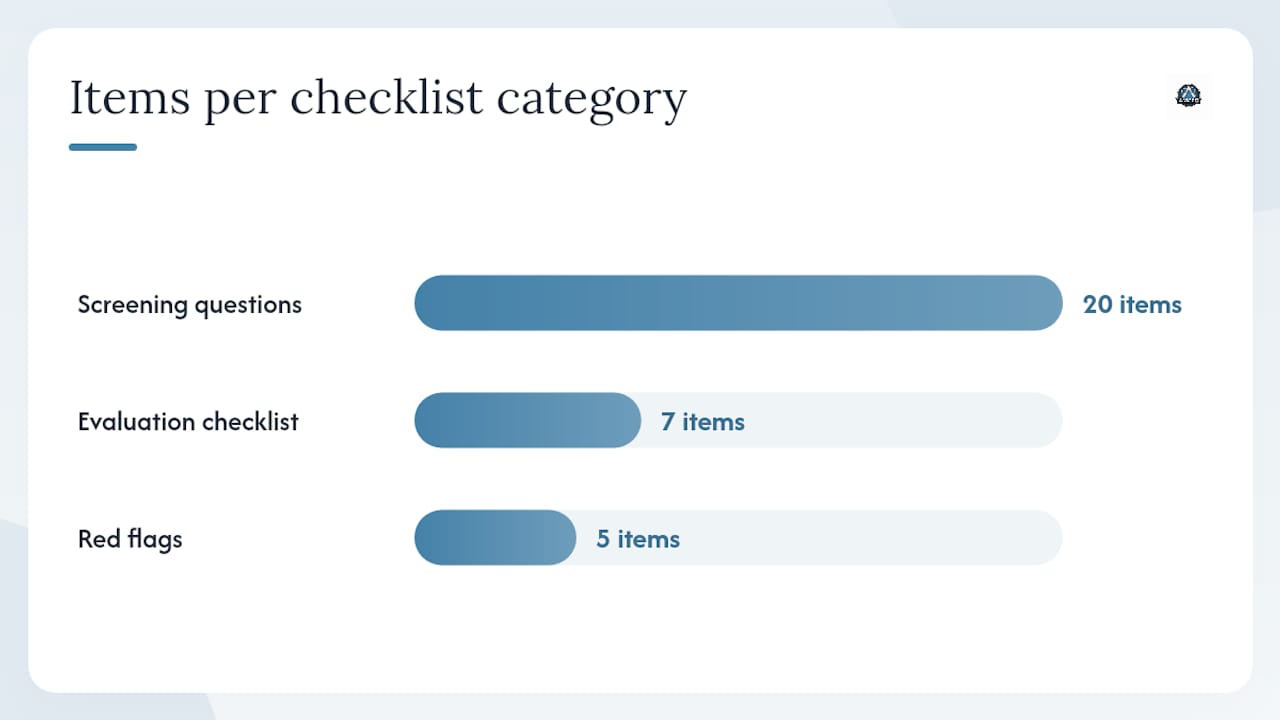
Evaluation checklist:
- Industry experience (has the firm worked with businesses in your sector?)
- CFO vs. bookkeeping focus (do you need strategy, operations, or both?)
- Reporting cadence (weekly flash reports, monthly closes, or quarterly reviews?)
- Tech integrations (QuickBooks, Xero, your ERP?)
- Security and compliance standards (SOC 2, data encryption, access controls)
- Contract flexibility (month-to-month vs. annual commitment, termination notice)
- References and case studies (can they show outcomes, not just services?)
20 screening questions to ask on a discovery call:
- What industries do you serve most, and what percentage of your clients are in mine?
- Who specifically will handle my account day-to-day?
- What happens to my account if my primary contact leaves?
- How do you handle a backlog or cleanup before the first clean close?
- What does your month-end close process look like, and what is the typical delivery date?
- Which accounting platforms do you work in natively?
- Do you provide read-only access or full collaborative access to my books?
- How do you coordinate with my tax preparer or CPA?
- What payroll platforms do you support?
- How do you handle payroll tax filings and year-end W-2s?
- What does a fractional CFO engagement actually deliver — reports, models, or meetings?
- How often will I meet with a CFO-level person, and what is the agenda?
- Can you show me a sample cash-flow forecast or budget-vs-actual report?
- What is your onboarding timeline from signed contract to first clean close?
- What do you need from me to start — and by when?
- How is pricing structured, and what triggers a scope change?
- What is your minimum engagement period and termination notice requirement?
- Have you helped a business at my revenue stage raise capital or prepare for a sale?
- What does success look like at 90 days, and how do you measure it?
- Can you provide two or three client references I can call?
Red flags to watch:
- Promising fundraising outcomes before reviewing your financial model
- Quoting scope only in hours with no defined deliverables
- Vague answers about how they coordinate with your tax, payroll, or operations teams
- No references, no case studies, or reluctance to share sample deliverables
- Contracts with long lock-in periods and no performance benchmarks
Key Takeaways
For most U.S. businesses in the $500K–$10M revenue range, a full-service fractional-CFO firm that also handles bookkeeping and payroll delivers more value than a marketplace contractor or a bookkeeping-only agency.
| Point | Details |
|---|---|
| Match provider to your primary need | Bookkeeping-heavy? Choose an agency. Need strategy + ops? Choose a full-service firm. |
| Fractional CFO cost range | Engagements typically run $3,000–$12,000 per month; cleanup is usually a separate one-time fee. |
| Onboarding timeline | Expect 4–8 weeks from signed contract to first clean close; have credentials and tax returns ready on day one. |
| Team model matters | A firm with team coverage reduces risk compared to a solo fractional CFO or marketplace contractor. |
| Amcfo as a recommended option | Amcfo covers bookkeeping through fractional CFO consulting, making it a strong single-firm alternative. |
What actually drives a good recommendation here
Most comparison articles on sites like amocap.com rank providers by feature count or price tier. That misses the point. The question that actually matters is whether the provider can turn your financial data into decisions you can act on — and that depends on deliverables, not titles.
The recommendations in this article weighted four things: the clarity of deliverables a provider commits to upfront, evidence of team coverage rather than single-person dependency, tech integrations that match how U.S. small businesses actually operate (QuickBooks and Xero, primarily), and pricing transparency. Providers that could not articulate what a client receives at 30, 60, and 90 days did not rank well, regardless of brand recognition.
One thing worth flagging: no article can substitute for a reference call. Every provider on this list has clients who will speak to their experience. Ask for two or three. The conversation you have with a current client will tell you more than any comparison table.
Amcfo publishes practical guides on hiring a fractional CFO for business owners who want deeper background before starting vendor conversations.
Amcfo covers the full stack, from books to board-level strategy

Most businesses searching for amocap.com alternatives are not just looking for cleaner books. They want someone who can close the month, explain what the numbers mean, and help make the next decision. Amcfo delivers exactly that: bookkeeping, QuickBooks cleanup, payroll support, tax coordination, and fractional CFO consulting in a single engagement, billed on a retainer and project model with no unnecessary complexity.
The practical next steps: request a scope review so Amcfo can assess where your books stand today, ask for a 30/60/90-day roadmap, and schedule a discovery call to confirm fit. View Amcfo's fractional CFO and accounting packages to see how engagements are structured before the call.
This article is general information, not professional financial or legal advice. Confirm current pricing, contract terms, and service scope directly with any provider before engaging.
Useful sources and further reading
- When to Hire a Fractional CFO: A Complete Guide for Growing Businesses | Beancount.io
- How to Choose a Fractional CFO: Evaluation Criteria and Questions | Alehar
- Fractional CFO vs Outsourced Finance vs In-house Team | CPA Outsourcing Services
- Fractional CFO Services | Amplify Consults
- What is fractional CFO? A small business owner's guide