

For U.S. compliance teams, the strongest alternatives to aml-corporation.com fall into three categories: enterprise AML suites with integrated transaction monitoring and sanctions screening, modular no-code platforms that let your team configure risk rules in-house, and identity/KYC specialists that plug into existing workflows. Before diving into the full comparison, one distinction matters: aml-corporation.com appears to operate as a consultancy or training provider rather than an enterprise software platform. If you need production-grade AML software that satisfies Bank Secrecy Act and FinCEN obligations, the vendors below are the right frame of reference.
Quick shortlist for U.S. firms:
- ComplyAdvantage — broad sanctions, PEP, and adverse media coverage; best for mid-market to enterprise teams
- NICE Actimize — enterprise-grade transaction monitoring at high volume; best for large banks
- SAS Anti-Money Laundering — advanced analytics and custom risk modeling; best for analytics-heavy enterprises
- LexisNexis Risk Solutions — deep regulatory data and integrated CDD; best for banks needing comprehensive compliance reporting
- Fenergo — end-to-end KYC/CDD lifecycle management; best for institutions focused on client onboarding
- Nasdaq Verafin — built-in case management for community and regional banks
- Feedzai — real-time ML scoring for payments providers and fintechs
- Quantexa — entity resolution and network analytics for complex investigations
| Vendor | Best for | Standout |
|---|---|---|
| ComplyAdvantage | Mid-market to enterprise | Broad watchlist and adverse media coverage |
| NICE Actimize | Large banks | High-volume transaction monitoring |
| SAS Anti-Money Laundering | Analytics-driven enterprises | Custom risk modeling |
| LexisNexis Risk Solutions | Banks, regulated entities | Regulatory data depth and CDD integration |
| Fenergo | KYC/CDD-focused institutions | Client lifecycle orchestration |
| Nasdaq Verafin | Community and regional banks | Built-in investigative case management |
| Feedzai | Payments and fintechs | Real-time ML-based risk scoring |
| Quantexa | Complex investigations | Entity resolution and network analytics |
Table of Contents
- How do these AML platforms compare side by side?
- How do you choose the right AML solution for your institution?
- Which AML platform fits your institution size and use case?
- How were these alternatives selected?
- Key Takeaways
- What most compliance teams get wrong about AML software selection
- Amcfo can help you navigate AML vendor selection and controls integration
- Useful sources for further research
How do these AML platforms compare side by side?
The table below maps each platform against the dimensions compliance procurement teams actually use. Pricing models are described by shape, not by specific figures, since most vendors publish only on request.
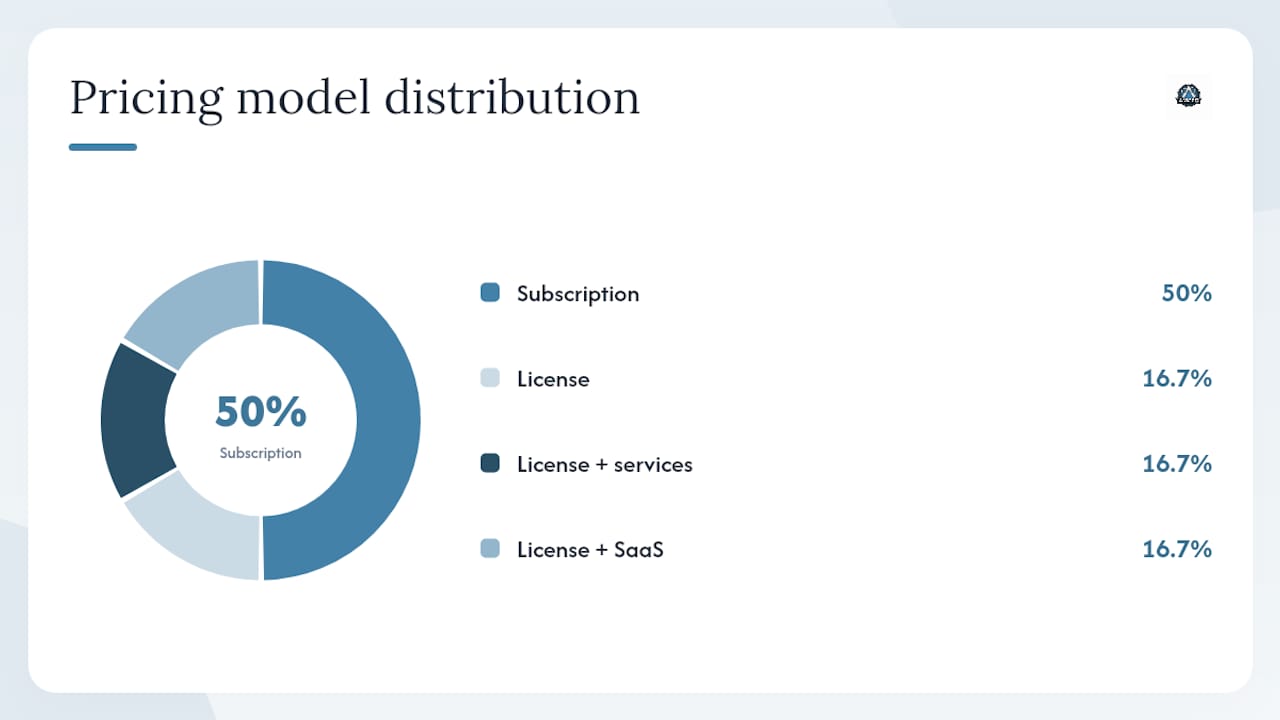
| Vendor | Best for | Core capabilities | Deployment | Explainable AI / FP rates | Pricing model | US regulatory fit |
|---|---|---|---|---|---|---|
| ComplyAdvantage | Mid-market to enterprise | TM, sanctions, PEP, adverse media | Cloud | Moderate explainability; broad data reduces noise | Subscription | BSA/FinCEN, FATF |
| NICE Actimize | Large banks | TM, analytics, case mgmt | Cloud, on-prem, hybrid | Enterprise analytics; tunable thresholds | License + services | BSA/FinCEN, OCC |
| SAS Anti-Money Laundering | Analytics enterprises | TM, risk scoring, custom models | Cloud, on-prem | Strong model transparency; custom scoring | License | BSA/FinCEN, FATF |
| LexisNexis Risk Solutions | Banks, regulated entities | CDD, TM, sanctions, reporting | Cloud, hybrid | Multi-source data reduces false positives | Subscription | BSA/FinCEN, FATF |
| Fenergo | KYC/CDD-focused institutions | KYC, CDD, onboarding, lifecycle | Cloud, on-prem | Workflow-driven; audit trail | License + SaaS | BSA/FinCEN, FATF |
| Nasdaq Verafin | Community/regional banks | TM, fraud, case management | Cloud | Bank-specific rules; built-in case mgmt | Subscription | BSA/FinCEN |
| Feedzai | Payments, fintechs | Real-time TM, fraud, ML scoring | Cloud | Real-time ML; configurable thresholds | Subscription | BSA/FinCEN, PCI |
| Quantexa | Complex investigations | Entity resolution, network analytics | Cloud, on-prem | Network-based explainability | License | BSA/FinCEN, FATF |
| Lucinity | Mid-market banks | Behavioral analytics, case mgmt | Cloud | Explainable AI; analyst UX focus | Subscription | BSA/FinCEN |
| DataVisor | Cross-channel fraud/AML at scale | Pattern detection, ML, fraud | Cloud | Large-scale ML; cross-dataset patterns | Subscription | BSA/FinCEN |
| Napier AI | AI-first monitoring teams | TM, alert prioritization, AI | Cloud | Explainability and alert scoring | Subscription | BSA/FinCEN, FATF |
| Hummingbird | Mid-market, faster deployment | TM, risk scoring, case mgmt | Cloud | Simplified rules; faster tuning | Subscription | BSA/FinCEN |
Vendor profiles
ComplyAdvantage covers sanctions lists, PEP databases, and adverse media in a single searchable feed. User reviews on G2 consistently highlight the breadth of its watchlist data and the speed of updates. The platform suits compliance teams that need to screen at volume without building their own data pipeline. The main trade-off: deep customization of alert logic requires configuration effort that smaller teams may underestimate.
NICE Actimize is the default choice for tier-one and tier-two banks that process millions of transactions daily. Its analytics layer handles scenario-based monitoring and supports the audit documentation that OCC and FinCEN examiners expect. Implementation is a multi-month project; budget for professional services.
SAS Anti-Money Laundering appeals to institutions with in-house data science teams. The platform's model customization lets analysts build and validate risk-scoring models against their own transaction data, which matters when a bank's customer base has unusual patterns that off-the-shelf rules miss.
LexisNexis Risk Solutions integrates its own risk-data services directly into the AML workflow, which is the real differentiator. When CDD, sanctions screening, and transaction monitoring draw from the same underlying data layer, false positives drop because the system is comparing consistent signals rather than reconciling mismatched records from separate vendors.
Fenergo is not primarily a transaction monitoring tool. It owns the client lifecycle: onboarding, periodic review, and regulatory change management. For institutions where KYC remediation backlogs are the compliance bottleneck, Fenergo addresses the root cause rather than the symptom.
Nasdaq Verafin was built specifically for community and regional banks, and that focus shows. The case management workflows mirror how a small compliance team actually operates, without requiring a dedicated implementation team to configure them. It handles both AML and fraud detection in one platform, which matters for institutions that cannot afford two separate vendor relationships.
Feedzai runs risk scoring in real time at the transaction level, which makes it the natural fit for card issuers, payment processors, and fintechs where a 200-millisecond decision window is the constraint. Its ML models are trained on payments data, not generic financial crime patterns.
Quantexa solves a different problem: it maps relationships between entities to surface money-laundering networks that transaction-level rules miss entirely. If your institution handles complex correspondent banking or trade finance, entity resolution is the capability that changes outcomes.
Lucinity focuses on the analyst experience. Its explainable AI surfaces the reasoning behind each alert in plain language, which cuts investigation time and supports the documentation trail regulators want to see. Mid-market banks that are drowning in unworked alerts will find this approach practical.
DataVisor applies unsupervised machine learning across large, cross-channel datasets to detect coordinated fraud and AML patterns before rules-based systems catch them. It suits organizations with diverse data sources that need a single detection layer.
Napier AI prioritizes alert quality over alert volume. Its scoring engine ranks alerts by risk weight, so analysts work the highest-priority cases first rather than triaging a flat queue. The modular, no-code configuration approach means compliance teams can adjust rules without waiting for a vendor release cycle.
Hummingbird is the fastest path from contract to live monitoring for a mid-market firm. The platform trades some configurability for speed: you get a working system in weeks, not months, with case management included.
How do you choose the right AML solution for your institution?
The single most important criterion is integration: a platform that cannot cleanly ingest your core banking or payments data will generate excessive false positives regardless of how sophisticated its detection logic is. Demonstrable false-positive reduction, backed by a reference customer in your institution type, is the second gate.
Step-by-step procurement checklist:
- Requirements capture — Document your BSA/FinCEN obligations, transaction volumes, entity types, and current false-positive rate. Define your deployment constraint (cloud-only, on-prem required, or hybrid acceptable).
- Vendor shortlisting — Use analyst review pages and platforms like G2 and Capterra to identify vendors with verified customer references in your institution category. Require at least one U.S. bank or fintech reference.
- Proof of concept (PoC) — Run a 30-day PoC using 90 days of your own transaction data. Score each vendor on false-positive rate, alert quality, and integration effort.
- Contract terms — Negotiate data ownership clauses, SLA uptime commitments, and audit-support obligations before signing. Confirm the vendor's process for regulatory change updates.
- Onboarding timeline — Enterprise platforms typically require several months from contract to go-live. Cloud-native mid-market tools often land closer to a few weeks to a few months. Build that range into your project plan.
Demo scoring rubric (apply during vendor presentations):
| Criterion | Weight | What to look for |
|---|---|---|
| Integration with your core system | — | Live demo with your data format or a close proxy |
| False-positive rate evidence | — | Reference customer data, not vendor-supplied benchmarks |
| Explainability of alerts | — | Can an analyst explain the alert to an examiner in one sentence? |
| US regulatory references | — | BSA/FinCEN, FinCEN SAR filing support, FATF alignment |
| API coverage | — | REST API docs, sandbox availability, integration timeline |
| Audit trail and reporting | — | Automated SAR/CTR reporting, examiner-ready exports |
| Vendor support and training | 5% | Named support contacts, SLA, onboarding resources |
Red flags to watch:
- No U.S. customer references in your institution category
- Opaque or unlisted watchlist data sources
- No sandbox or PoC option before contract signature
- Weak or absent audit trail for alert dispositions
- Pricing tied entirely to alert volume with no cap (creates perverse incentives to generate more alerts)
Pro Tip: During the PoC, run a sample of your known-good transactions through the system alongside a set of flagged cases from your last regulatory exam. The ratio of true positives to false positives on that known set tells you more than any vendor benchmark.
Which AML platform fits your institution size and use case?
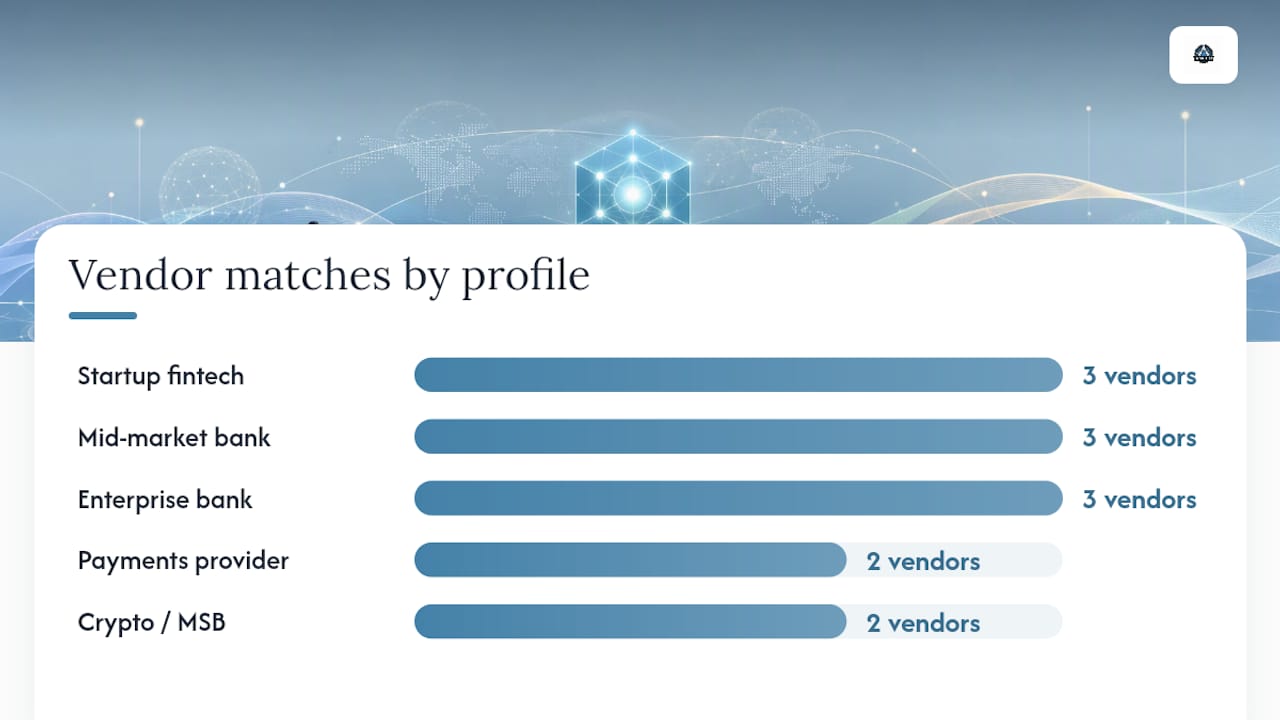
The right platform category follows directly from your organization's size and primary compliance exposure. A startup fintech and a regional bank face different regulatory pressures, different data architectures, and different implementation budgets.
| Organization profile | Recommended platform type | Vendor matches |
|---|---|---|
| Startup fintech | API-first cloud SaaS, KYC/identity specialist | Feedzai, Napier AI, Hummingbird |
| Mid-market bank | Modular cloud AML with case management | Nasdaq Verafin, Lucinity, Hummingbird |
| Enterprise bank | Full-suite enterprise AML | NICE Actimize, SAS AML, LexisNexis Risk Solutions |
| Payments provider | Real-time ML scoring | Feedzai, DataVisor |
| Crypto / MSB | Configurable rules + sanctions screening | ComplyAdvantage, Napier AI |
| Complex investigations | Entity resolution and network analytics | Quantexa |
Procurement priorities by profile:
- Fintechs should prioritize API-first deployment, cloud SaaS delivery, and identity verification integration. Platforms like Sumsub and iDenfy serve the KYC layer; user reviews on G2 and Capterra profiles give practical signals on integration effort and support responsiveness before you commit.
- Enterprise banks — should weight data coverage and model customization above all else. The ability to tune risk thresholds against your own historical data separates platforms that reduce examiner findings from those that just generate more paperwork.
Integration complexity scales with institution size. A fintech connecting via REST API to a cloud SaaS platform typically involves one IT engineer and a compliance analyst. An enterprise bank deploying on-prem with core banking integration involves IT, legal, compliance, procurement, and often a systems integrator. Map your internal stakeholders before you issue an RFP, not after.
How were these alternatives selected?
Vendors were shortlisted based on analyst mentions, verified U.S. regulatory fit, and feature coverage across the core AML procurement dimensions: transaction monitoring, sanctions screening, KYC/CDD, case management, and explainability.
Selection criteria applied:
- Confirmed BSA/FinCEN alignment and FATF coverage
- Core capabilities spanning at least transaction monitoring and sanctions screening
- Evidence of false-positive reduction or explainability features
- Scalable deployment options (cloud, hybrid, or on-prem)
- API coverage sufficient for integration with common core banking or payments systems
- Analyst mentions (Gartner, Celent) or verified review-platform presence (G2, Capterra)
Data sources used:
- Gartner peer review pages for analyst-driven vendor categorization
- G2 seller profiles and Capterra listings for user sentiment and integration experience
- Vendor documentation and public product pages
- Regulatory guidance from FinCEN and FATF
Vendors were excluded when they operate primarily as consultancies or training providers rather than software platforms, when they lack verifiable U.S. customer references, or when their feature set covers only a single narrow function (e.g., identity document scanning only) without broader AML workflow support. The snapshot reflects publicly available information as of 2026.
This list does not include small regional consultancies. The distinction matters: a consultancy can advise on your AML program design, but it cannot replace a software platform for transaction monitoring, sanctions screening, or SAR filing support. If you need guidance on evaluating software for financial teams, that procurement process differs meaningfully from hiring an advisory firm.
Key Takeaways
The strongest AML platform for a U.S. firm is the one that integrates cleanly with your existing data, demonstrably reduces false positives, and carries verifiable BSA/FinCEN alignment before you sign anything.
| Point | Details |
|---|---|
| Integration is the first gate | A platform that cannot ingest your core data cleanly will generate excessive false positives regardless of its detection logic. |
| Run a PoC with your own data | Test vendors against 90 days of your own transactions; vendor-supplied benchmarks are not a substitute for your institution's actual patterns. |
| Match platform type to institution size | Fintechs need API-first SaaS; mid-market banks need built-in case management; enterprise banks need analytics depth and data coverage. |
| Regulatory fit is non-negotiable | Require documented BSA/FinCEN alignment and at least one U.S. reference customer in your institution category before shortlisting. |
| Amcfo supports procurement and controls | Amcfo's fractional CFO services can coordinate RFP processes, PoC support, and post-implementation finance controls for teams that need hands-on help. |
What most compliance teams get wrong about AML software selection
The conventional wisdom says pick the platform with the best detection rates. That framing misses the real failure mode.
Most AML implementations that underperform do so not because the software is bad, but because the data feeding it is inconsistent. KYC records from one system, transaction data from another, and sanctions screening from a third vendor create a fragmentation problem that no detection algorithm can fully compensate for. The platforms that reduce false positives most reliably, like LexisNexis Risk Solutions, do it by consolidating data sources, not by running smarter rules on fragmented inputs.
The second mistake is treating go-live as the finish line. U.S. regulators, particularly FinCEN examiners, look at whether your risk thresholds have been tuned since implementation and whether your alert disposition logic reflects your current customer risk profile. A platform configured in year one and left untouched in year three is a compliance liability, not an asset. No-code platforms from vendors like Napier AI and the RegTechONE approach exist precisely because compliance teams need to iterate on rules without waiting six months for a vendor release.
The third underestimated factor is analyst experience. A platform that generates 500 alerts a week with no prioritization logic burns out your team and degrades alert quality over time. Explainability features, like those Lucinity and Napier AI emphasize, are not a nice-to-have. They are what keeps your analysts engaged and your documentation audit-ready.
Pro Tip: Ask every vendor during the demo to show you the audit trail for a single alert from detection through disposition. If they cannot walk you through that chain in under five minutes, your examiners will not be able to either.
Amcfo can help you navigate AML vendor selection and controls integration
Selecting AML software is a procurement project with real financial and regulatory stakes. The tools above handle detection and monitoring; the harder work is aligning the vendor selection process with your internal controls, reporting requirements, and post-implementation finance workflows.

Amcfo's fractional CFO services give compliance and finance teams a practical partner for exactly this kind of project. Whether you need help structuring an RFP, managing a PoC evaluation, or building the reconciliation and reporting templates that tie AML outputs to your financial controls, Amcfo brings the finance and controls expertise that pure-play AML vendors do not provide.
Typical deliverables Amcfo supports:
- RFP coordination and vendor scoring frameworks
- PoC project management and evaluation documentation
- Post-implementation reconciliation and reporting templates
- Finance and controls integration aligned to BSA/FinCEN reporting
- Ongoing accounting and bookkeeping support for compliance-related financial reporting
This is a service option, not a vendor endorsement. Amcfo does not resell or certify any of the AML platforms listed in this article. To discuss how Amcfo can support your next vendor evaluation or controls project, visit amcfo.com/fractional-cfo-services.
This article provides general informational guidance and does not constitute legal, regulatory, or compliance advice. Confirm current BSA/FinCEN requirements with FinCEN directly or a qualified compliance professional.
Useful sources for further research
The sources below are worth bookmarking before you issue an RFP or begin a PoC evaluation.
- Anti-Money Laundering Solutions & AML Compliance | LexisNexis Risk Solutions
- Gartner — AML Watcher alternatives
- Anti-Money Laundering (AML) Software | RegTechONE
- ComplyAdvantage — G2 seller profile
- ComplyAdvantage — Capterra profile
- iDenfy — Capterra profile
- idenfy reviews — G2
- Sumsub reviews — G2